
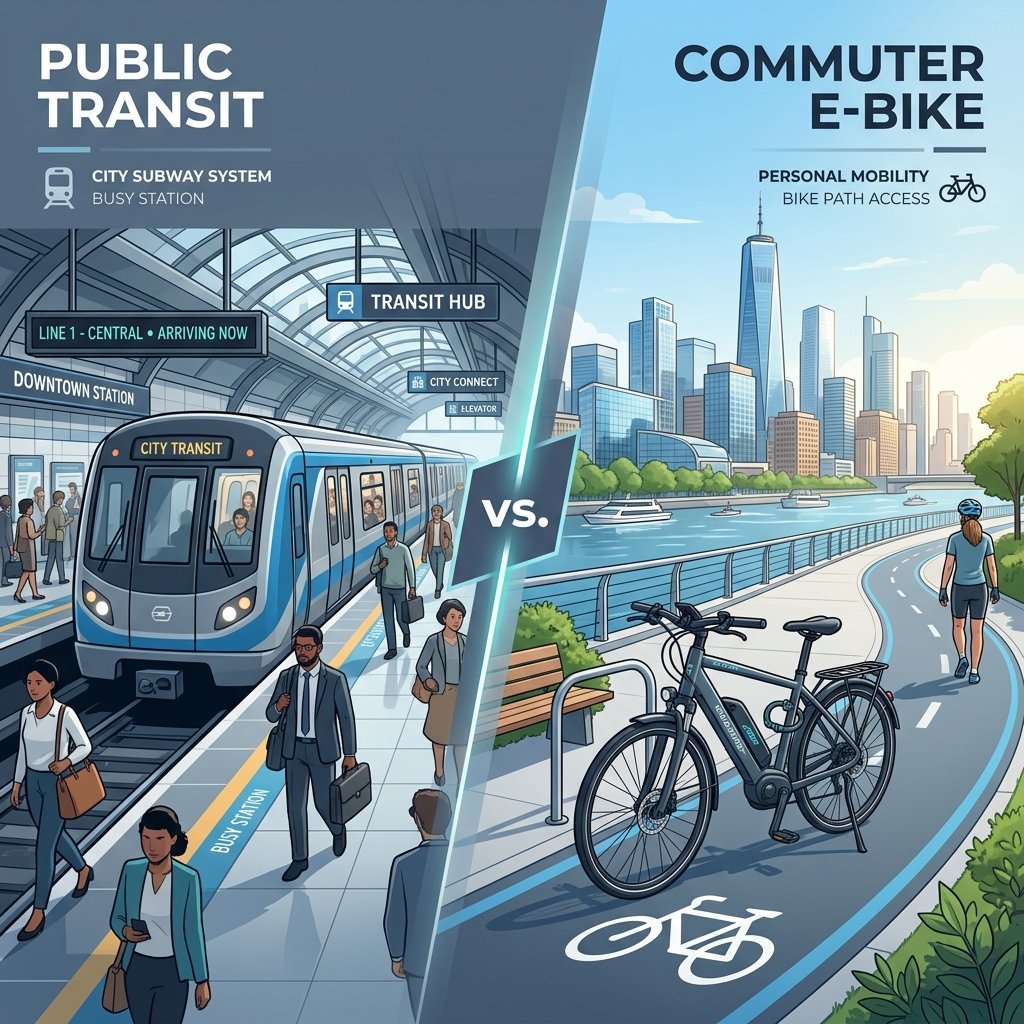
In urban areas, daily commuting costs can add up quickly, especially when relying on public transit or driving. For many commuters, electric bikes (e-bikes) have emerged as a cost-effective and sustainable alternative. In this post, we will compare the expenses of buying and charging a budget e-bike versus the annual cost of subway and bus transit passes, while also highlighting time savings, safety, and health benefits associated with active riding.
Cost Comparison: Budget E-Bike vs. Public Transit
When evaluating commuting costs, it’s important to consider both one-time and recurring expenses.
E-Bike Costs
- Initial Purchase: A budget e-bike typically costs between $800 to $1,200.
- Charging Costs: On average, charging an e-bike costs less than $0.10 per full charge which can last for 20-40 miles.
- Maintenance: Regular maintenance may include tire replacements, brake adjustments, and occasional battery replacements.
- Annual Cost Estimate: Charging and minor maintenance typically add up to about $100-$150 per year.
Public Transit Costs
- Monthly Pass: Average monthly subway or bus passes range between $100 to $150.
- Annual Pass: For convenience, many transit systems offer annual passes which can total $1,200 to $1,800 annually.
- Additional Costs: Occasional taxi rides due to transit delays or route coverage limitations.
Summary: Over a year, the cost of owning and operating an e-bike is generally much lower, approximately $1,000 including purchase amortization, compared to transit costs which can exceed $1,200 annually.
Time Savings and Convenience
Aside from monetary savings, e-bikes offer significant advantages in terms of time:
- Avoid Delays: Public transit often experiences delays due to traffic, maintenance, or overcrowding.
- Flexible Routes: E-bikes allow for direct point-to-point routes without transfers.
- Easy Parking: E-bike owners save time finding parking spots compared to car users.
These factors can shorten commutes considerably, reducing stress and improving work-life balance.
Safety and Health Benefits of Riding an E-Bike
Choosing an e-bike over public transit also promotes better health and safety:
- Active Riding: E-bikes provide low-impact aerobic exercise that benefits cardiovascular health.
- Mental Well-being: Outdoor riding reduces stress and improves mood.
- Safety: E-bikes typically travel at moderate speeds, reducing accident severity compared to cars.
Environmental Impact
E-bikes produce zero emissions while in use, contributing to cleaner air and less urban congestion compared to fossil fuel-powered transportation.
Conclusion
For daily commuters, budget e-bikes are usually cheaper than public transit when considering both direct and indirect costs. They also offer time-saving convenience, promote safety, provide health benefits, and support environmental sustainability.
For a detailed cost analysis and savings calculator, check our comprehensive guide How Much Money Does an Electric Bike Save You? The Ultimate 2026 EV Savings & ROI Guide and try out our ⚡ Commuter EV Savings ROI Calculator.
FAQs
Q1: How much does it cost to charge an e-bike annually?
Charging costs are minimal, usually under $150 per year depending on usage.
Q2: Can I use an e-bike in all weather conditions?
While e-bikes can be used year-round, safety precautions should be taken in rain or snow.
Q3: Are e-bikes safe for city commuting?
Yes, with appropriate safety gear and adherence to traffic rules, e-bikes are a safe commuting option.
Q4: Does using an e-bike reduce my carbon footprint?
Absolutely, e-bikes contribute significantly less to pollution compared to cars or motorized public transit.
Q5: What is the average lifespan of an e-bike?
With proper care, e-bikes can last 5-10 years depending on usage and maintenance.